Today Call Us: 86-15990205383

Pot Magnets   Get a quote
Pot Magnets
  • Home
  • About us
    • Equipment
    • QMS
  • Products
    • Neodymium Pot Magnets
      • Neodymium Flat Pot Magnets
      • Neodymium Hook Magnets
      • Neodymium Eyelet Magnets
      • Countersunk Neodymium Pot Magnets
      • Cylindrical Hole Neodymium Pot Magnets
      • Internal Thread Neodymium Pot Magnets
      • External Thread Neodymium Pot Magnets
      • Threaded Bushing Neodymium Pot Magnets
    • Ferrite Pot Magnets
      • Ferrite Flat Pot Magnets
      • Ferrite Hook Magnets
      • Ferrite Eyelet Magnets
      • Cylindrical Hole Ferrite Pot Magnets
      • Countersunk Ferrite Pot Magnets
      • External Thread Ferrite Pot Magnets
      • Threaded Bushing Ferrite Pot Magnets
    • Rubberised Pot Magnets
      • with Hole / Countersink
      • with Internal Thread
      • with External Thread
      • with Threaded Bushing
      • with Cylindrical Grip
      • for Screw Mounting
      • Other Versions
    • SmCo Pot Magnets
      • SmCo Deep Pot Magnets
        • SmCo Pots with Fitting Tolerance h6
      • SmCo Round Base Magnets
    • Alnico Pot Magnets
      • Alnico Shallow Pot Magnets
      • Alnico Deep Pot Magnets
        • AlNiCo Pots with Fitting Tolerance h6
        • External Thread AlNiCo Pots
        • Internal Thread AlNiCo Pots
        • Flat AlNico Deep Pots
    • Magnetic Assemblies
      • Magnetic Pad
      • Shuttering Magnets
      • Treasure Salvage Magnets
      • Permanent Magnetic Lifter
      • Magnetic Filter Bar
      • Plastic Coated Hook Magnets
      • Channel Magnet Assemblies
      • Shuttering Systems
      • Loaf Magnets
      • Insert Magnets
  • Blog
  • Contact us
  • Support
  • Home
  • About us
    • Equipment
    • QMS
  • Products
    • Neodymium Pot Magnets
      • Neodymium Flat Pot Magnets
      • Neodymium Hook Magnets
      • Neodymium Eyelet Magnets
      • Countersunk Neodymium Pot Magnets
      • Cylindrical Hole Neodymium Pot Magnets
      • Internal Thread Neodymium Pot Magnets
      • External Thread Neodymium Pot Magnets
      • Threaded Bushing Neodymium Pot Magnets
    • Ferrite Pot Magnets
      • Ferrite Flat Pot Magnets
      • Ferrite Hook Magnets
      • Ferrite Eyelet Magnets
      • Cylindrical Hole Ferrite Pot Magnets
      • Countersunk Ferrite Pot Magnets
      • External Thread Ferrite Pot Magnets
      • Threaded Bushing Ferrite Pot Magnets
    • Rubberised Pot Magnets
      • with Hole / Countersink
      • with Internal Thread
      • with External Thread
      • with Threaded Bushing
      • with Cylindrical Grip
      • for Screw Mounting
      • Other Versions
    • SmCo Pot Magnets
      • SmCo Deep Pot Magnets
        • SmCo Pots with Fitting Tolerance h6
      • SmCo Round Base Magnets
    • Alnico Pot Magnets
      • Alnico Shallow Pot Magnets
      • Alnico Deep Pot Magnets
        • AlNiCo Pots with Fitting Tolerance h6
        • External Thread AlNiCo Pots
        • Internal Thread AlNiCo Pots
        • Flat AlNico Deep Pots
    • Magnetic Assemblies
      • Magnetic Pad
      • Shuttering Magnets
      • Treasure Salvage Magnets
      • Permanent Magnetic Lifter
      • Magnetic Filter Bar
      • Plastic Coated Hook Magnets
      • Channel Magnet Assemblies
      • Shuttering Systems
      • Loaf Magnets
      • Insert Magnets
  • Blog
  • Contact us
  • Support

Author: potmagnets

HomeArticles Posted by potmagnets
Magnetic Shielding Materials Types, Applications, and Selection Criteria

Magnetic Shielding Materials: Types, Applications, and Selection Criteria

by potmagnetson 7 February 2026in Flexible Magnet, Magnetic Materials, Magnetic Strip, Magnets Kownledge No comment

Magnetic Shielding Materials: Types, Applications, and Selection Criteria

Magnetic fields exert an invisibly powerful force that profoundly impacts modern electronics. Although essential in many fields-power generation and electric motors are examples-magnetic interference can cause irreparable harm in certain fields, such as healthcare, aircraft travel, and communication services.

Scientists and engineers employ magnetic shielding materials to combat this, specifically to reroute or reduce magnetic fields. Such components protect equipment, guarantee security, and increase functionality. Addressing industry difficulties requiring high accuracy and minimal disturbance requires understanding and commitment to the proper shielding material.

Magnetic shielding has several uses outside of research labs. In our technologically advanced world, shielding materials are used in everything from industrial machinery to consumer gadgets. For experts and enthusiasts, this guide will thoroughly explain the principles of magnetic shielding, the materials utilized, and their applications.
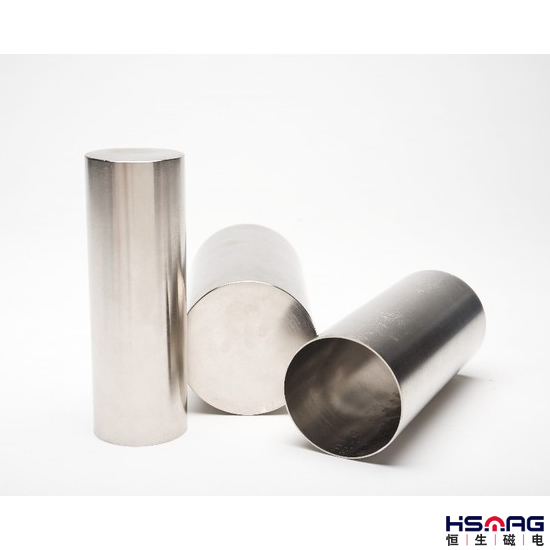
Magnetic Shielding Materials Types, Applications, and Selection Criteria

neodymium magnet

What is Magnetic Shielding?
Magnetic shielding redirects and weakens magnetic fields to safeguard delicate devices. High magnetic permeability materials are used because they minimize interference by drawing in and rerouting magnetic field lines. Shielding, however, confines or reroutes magnetic fields rather than eliminating them.

Why is Magnetic Shielding Necessary?
Magnetic shielding is essential because it can:

Guard delicate equipment against outside magnetic fields that could skew signals or harm parts.

Boost efficiency in high-precision applications such as navigation systems or medical imaging.

Basics of Shielding Effectiveness
The kind of material, its thickness, and the shielding enclosure’s shape are crucial elements that affect how efficient magnetic shielding is. Mu-metal and other materials with high magnetic permeability are very good at rerouting magnetic fields. However, the frequency and intensity of the field can affect how well they perform.

Another important factor is the shielding’s location and form. Compared to flat or angular geometries, rounded or seamless enclosures are superior at preventing magnetic field leakage. Furthermore, the shielding material’s resistance to greater magnetic fields is determined by its thickness. When the material can no longer efficiently reroute more field lines, saturation is more challenging to achieve with thicker materials.

Misconception: Magnetic shielding does not eradicate magnetic fields – instead, it attenuates or redirects them, thus decreasing their effect on sensitive regions. Recognizing this distinction will enable reasonable expectations when selecting or creating shielding solutions.

Basics of Shielding Effectiveness

Types of Magnetic Shielding Materials
Magnetic shielding materials are essential for managing magnetic interference in sensitive environments, providing crucial protection from harmful magnetic interference. Materials chosen based on their ability to redirect magnetic fields based on their magnetic permeability, saturation point, and environmental stability properties should be carefully considered as they could make all the difference in smooth operation versus costly disruptions. Understanding available materials helps tailor shielding solutions specifically tailored to particular applications.

Standard Materials for Magnetic Shielding
Mu-Metal
Mu-metal, or nickel-iron alloy with very high magnetic permeability, is widely recognized as one of the most efficient shielding materials, often employed in MRI machines, scientific instruments, and other precision applications requiring magnetic shielding. However, mechanical stress may reduce its efficacy over time.

Ferrites

Ferrites are ceramic-based materials with low electrical conductivity, perfect for electromagnetic interference (EMI) control at higher frequencies. They are popular in electronics like Wi-Fi routers and smartphones.

Permalloy

Another nickel-iron alloy, Permalloy, is frequently utilized for electromagnetic compatibility applications in transformers, telecom systems, and magnetic sensors due to its balance of cost-efficiency and performance – making it one of the preferred choices among industrial users.

Advanced and Emerging Materials
Amumetal and Specialty Alloys

Amumetal alloys have been developed for applications requiring high field strengths. These materials offer outstanding performance in industries like aerospace and defense.

Nanomaterials and Composites

Emerging technologies have revealed lightweight yet highly efficient nanomaterials and composites; these materials are well suited to automotive and portable electronics products where weight and efficiency are of primary concern.

neodymium magnet

Comparative Analysis of Materials
Material

Magnetic Permeability

Applications

Cost

Mu-Metal

Very High

Medical imaging, scientific tools

High

Ferrites

Moderate

Electronics, high-frequency devices

Moderate

Permalloy

High

Transformers, communication systems

Moderate

Low Carbon Steel

Low

Industrial machinery

Low

Nanomaterials

Varies (High Potential)

Aerospace, advanced electronics

High (Emerging)

Real-World Applications
From enhancing the functionality of common consumer electronics to safeguarding medical devices, magnetic shielding materials are indispensable in a wide range of sectors and applications. Their numerous applications show how diverse and essential they are to contemporary technology.

Communication and Electronics
Magnetic shielding protects sensitive parts like transformers, microchips, and sensors from electromagnetic interference, which extends their lifespan and reliability while preventing damage to consumer electronics like tablets, laptops, and smartphones.

Shielding ensures signal integrity by preventing interruptions to internet connections and mobile networks.

Healthcare Applications
Magnetic shielding is necessary for medical diagnostic equipment to be accurate and effective. For example, magnetic resonance imaging devices use powerful magnetic fields that must be free from external interference to provide clear imaging images. Shielding prevents the powerful electromagnetic fields these machines produce from affecting adjacent equipment.

Aerospace and Automotive Industries
Shielded navigation systems and communication devices are essential for space applications because they insulate them from external magnetic fields that could impair accuracy. In autonomous cars, where sophisticated sensors and computers must function continuously, shielding is especially essential.

Electric vehicle (EV) manufacturers use shielded battery management systems to lower electromagnetic interference and improve safety and efficiency.

Industrial and Defense Applications.
Heavy equipment and power systems are shielded from magnetic interference to guarantee continuous functioning in industrial environments. At the same time, shielding is crucial for military applications that protect radar equipment, electromagnetic warfare systems, and communications.

Specialty alloys and other high-performing solutions are crucial for shielding materials since they must endure severe environments.

Designing Magnetic Shielding Solutions
Effective magnetic shielding solutions necessitate a well-informed, strategic approach that considers material qualities, enclosure geometry, and application specificities to maximize shielding efficiency while reducing costs and material usage. Properly designed shields can lower material consumption costs and significantly increase shielding efficiency.

Effective magnetic shielding solutions necessitate a well-informed, strategic approach that takes into account material qualities, enclosure geometry, and application specificities to maximize shielding efficiency while reducing costs and material usage. Properly designed shields can lower material consumption costs and significantly increase shielding efficiency.

Geometry and Material Placement
The shape and location of shielding materials are crucial. Enclosures with seamless shapes or rounded corners offer superior control over magnetic field leakage and more efficient field line redirection. Additionally, it is essential to carefully position shielding close to locations susceptible to interference, such as CPUs and sensors on electrical devices.

Layering and Hybrid Solutions
Layering multiple materials enhances shielding effectiveness by targeting different frequencies and field strengths. For instance, layering mu-metal for low-frequency shielding with ferrites for high-frequency interference protection provides comprehensive coverage. Hybrid solutions may prove especially valuable where one material cannot meet all performance criteria. Layering allows designers to balance cost with efficiency by including less costly materials in less critical areas of design.

Testing and Optimization
For optimal shielding design performance, thorough testing is an absolute necessity. Devices like magnetic flux sensors and simulation software accurately evaluate shielding effectiveness under real-world conditions. Such tests help identify weak points in your design so adjustments may be made to enhance it. This might involve increasing material thicknesses or changing enclosure shapes. Optimizing may involve tweaking material thickness or combinations based on what works.

Challenges and Limitations
Magnetic shielding plays an essential role, yet implementation poses numerous difficulties for engineers and designers. They must negotiate material limitations, environmental concerns, and cost considerations while developing effective solutions. Acknowledging these hurdles is the key to making informed decisions and devising efficient shielding strategies.

Material Saturation and Limits
Magnetic shielding materials often reach their magnetic capacity when shielding environments with strong magnetic fields. They can no longer redirect additional magnetic field lines effectively, significantly diminishing their shielding effectiveness and ultimately impacting performance. When this happens, shielding performance drops dramatically, reducing performance in such environments as hospitals.

Mu-metal and similar high-performance materials were originally intended to handle moderate environments; however, extreme conditions may necessitate additional materials or solutions.

Environmental Factors
To remain effective shields for heavy-duty applications, shielding materials must meet various environmental challenges such as corrosion, temperature variations, and mechanical strain. Low-carbon steel tends to rust easily in humid environments, while materials like ferrites may resist wear better but lack the strength required by heavy-duty applications.

Selecting an optimal material requires striking a balance between performance and environmental requirements for an application.

Cost/Benefit Considerations
Mu-metal and advanced composite shielding materials may be costly solutions for large-scale shielding needs, and industries with tight budget constraints may opt for less effective but cheaper materials, like low-carbon steel.

Balance cost with shielding performance often requires creative design strategies, like layering or hybrid solutions, to optimize efficiency while keeping expenses within reasonable bounds.

Future of Magnetic Shielding Materials
Magnetic shielding technology continues to advance with advancements in materials and technologies driving innovation. Industries require increasingly efficient, lightweight, and eco-friendly solutions; researchers are exploring cutting-edge approaches to meet this demand; ultimately, the future of magnetic shielding lies within its ability to push performance, adaptability, and environmental responsibility boundaries further than ever.

Nanotechnology and New Alloys
Nanotechnology has opened up exciting prospects for ultrathin and lightweight shielding materials. Through molecular manipulation of materials, researchers can engineer nanostructures with superior magnetic permeability and efficiency that offer unparalleled magnetic shielding properties for applications within aerospace where weight reduction is critical. These materials are also handy during combat missions where weight reduction becomes vital.

New alloys are designed to withstand higher magnetic field strengths without becoming saturated, creating a more reliable performance in challenging environments like defense and industrial settings.

Integration with AI and Automation systems
Artificial Intelligence (AI) and automation have revolutionized the design and testing of magnetic shielding solutions. AI algorithms can simulate complex magnetic field interactions to optimize material placement while shortening prototyping timeframes; furthermore, automation ensures precision manufacturing that ensures consistent quality shielding materials.

These advances improve performance while decreasing production costs, making advanced shielding accessible across multiple industries.

Eco-Friendly Solutions
As environmental sustainability continues to become an international goal, researchers are considering designing eco-friendly shielding materials and manufacturing practices to minimize their environmental footprint without compromising performance. Such initiatives include biodegradable composites and decreasing dependence on rare-earth metals that require expensive mining processes for extraction. Manufacturing practices that follow sustainable principles aim to decrease impact without impactful performance loss from shielding solutions.

Summing It Up
From consumer electronics to aerospace systems, magnetic shielding materials are essential for safeguarding fragile machinery and facilitating the smooth operation of modern-day technology. Engineers, designers, and decision-makers must understand their characteristics, difficulties, and innovations.

Innovations like nanotechnology and environmentally friendly materials are transforming magnetic shielding systems in response to the growing demand for effective and sustainable shielding solutions. By using these advancements, industries may overcome present challenges and prepare for an increasingly technologically advanced future.

Purchasing magnetic shielding materials will guarantee the smooth operation of critical functions, increase dependability, and open the door for revolutionary developments. The first step to success and assurance is knowing your shielding needs, whether for industrial machinery designs, medical equipment, or automotive systems.

Bonded NdFeB Magnets and Assemblies

Sintered NdFeB Magnets and Assemblies

Pickup magnet

Strong NdFeB Magnetic Lifter PML3000A

Powerful Magnetic Lifter PML2000A

New Product 13000Gs Magnetic Rods!

Sintered NdFeB Magnetic Mounting Hook Ø48 mm
Sintered NdFeB Hook Magnet Ø38 mm

Clamping Hook Magnet Ø50 mm

Continue Reading
Magnetic Shielding Design for Manufacturing

Magnetic Shielding Design for Manufacturing

by potmagnetson 3 February 2026in Flexible Magnet, Magnetic Materials, Magnetic Strip, Magnets Kownledge No comment

Magnetic Shielding Design for Manufacturing

Magnetic shielding for static and low frequency (<100 kHz), time-varying magnetic fields is accomplished by containing a specific device or item within a sheet metal enclosure of high permeability material. Typically, a sensitive electronic component requires magnetic shielding protection from nearby transformers or power supplies radiating a potentially troublesome magnetic field. High permeability material is a nickel iron alloy consisting of 50 to 80 percent nickel. Initial static permeability values are in excess of 60,000. Permeability is defined as a ratio of the flux induced in a material (expressed as B, measured in Gauss) proportional to the ambient or applied magnetic field (expressed as H, measured in Oersted). As a reference, the initial permeability of a material is defined as the ratio of the induced flux B in the material divided by the ambient Earth’s magnetic field, H (approximately .50 Oersted). The high ratio indicates the material’s ability to induct magnetic flux. The simple B-H Graph shown in Figure 1 is used to determine a material’s permeability and resultant magnetic shielding performance. The orange line on the B-H Graph represents the function of high permeability material at DC and 60 Hz. The permeability value is equal to the derivative of that function. Note that as the applied field increases beyond the steepest slope, the permeability starts to decrease. This change is known as the saturation point of the material. Once the material becomes fully saturated, it offers no magnetic shielding protection as the derivative asymptotically approaches zero.

Magnetic Shielding Design for Manufacturing

Magnetic Shielding Design for Manufacturing

Figure 1. B–H graph used to determine a material’s permeability.
.
In most shielding applications, the specified shielding alloy is between .004″ and .120″ thick sheet metal. Thicker materials can be milled from bar stock. High permeability magnetic shielding alloys are produced by several steel mills worldwide.

FABRICATION

The typical magnetic shield design requires sheet metal fabricating and metal forming techniques. Shielding shapes include simple sheet metal cylinders, complex weldments, and precision machined housings. But in almost all cases an application involves an enclosure type design. Since magnetic flux will follow the path of least reluctance, the high permeability of the enclosure shape absorbs and shunts the magnetic flux, leaving the inside of the enclosure with a lower or attenuated magnetic field. The shield enclosure can also work the other way by containing a magnetic field within the enclosure boundary.

Once a shield enclosure is designed for shielding effectiveness, a mechanical design application is needed. A simple cylindrical shape is often the most effective shield and the simplest to fabricate. Sheet metal is rolled, and a seam can be butt welded or can be overlapped and spot welded. The mechanical forming constraints of high permeability alloys are very similar to those of stainless steel.

Figure 3. Fusion welded seams are TIG (Tungsten Inert Gas) welded.

Other typical shapes are similar to electronic chassis where a prefabricated flat panel is formed using a conventional sheet metal press brake and associated forming equipment. Complex assemblies can be fusion welded (Figure 2) or spot welded or can be attached with mechanical fasteners.

CYLINDERS

Figure 2. High permeability alloys laser machine readily.

The simplest and most effective shape for a magnetic shield is a sheet metal cylinder made of a high permeability material. A machine known as a slip roll or pinch roll is employed. The material is pinched between two rollers. Motion is applied and the material is then pushed against the forming roll. The resultant diameter of the finished cylinder is determined by the position of the forming roll relative to the pinching rolls. After the cylinder is roll formed to shape, the seam can be overlapped and spot welded or butted and fusion welded.

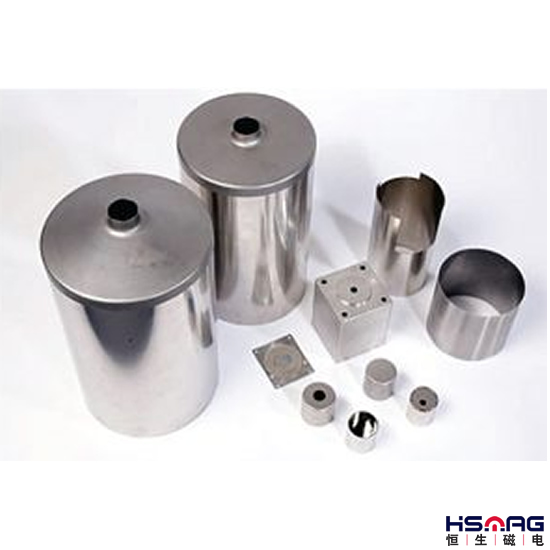
Figure 4. Typical shapes for magnetic shields are cylinders, cans. and rectangular enclosures. The covers for the cylinders were spun to shape.

A spot weld is a simple electrical resistance weld, and a butt, fusion weld is usually accomplished via a process known as TIG (Tungsten, Inert Gas) welding. The inert gas used is argon, and it serves to prevent oxidation and carburization of the material for the brief time it is in a molten state. Laser and electron beam welding can also be used (Figure 3). High permeability alloys weld quite well, and demanding mechanical tolerances can be achieved with proper weld fixturing.

Figure 5. A small cover is spun to shape.
SHAPES

Boxes and chassis shapes are achieved using a pre-cut blank and a typical press brake. Usually a part is developed in a flat pattern layout, which can then be laser machined or punched in a CNC punch press. Subsequent forming operations are done in a press brake. Corners and seams can be left open or can be welded shut depending on the application. In high volume applications, tooling can be designed that will pre-cut and form the blank in a single operation.

Figure 6. Examples of spun parts.

METAL SPINNING & HYDROFORMING

When stringent mechanical tolerances are required, metal spinning and hydroforming can be utilized. Metal spinning, as the name implies, involves rotating the material in a lathe and using a forming role to flow the metal against a mandrel. See examples in Figures 4, 5, and 6. The mandrel is a machined tool made to conform to the inside profile of the desired finished sheet metal part. The forming roll is usually controlled by an operator (spinner). Spinning metal requires a great deal of experience. If forced too far, the metal will crease or tear because of work hardening. Often the metal will require in-process annealing to relieve mechanical stress, and additional spinning can then occur. Of course, spinning can only be used on parts that are round or conical. The advantage of spinning is low tooling costs as mandrels are often made from wood or aluminum.

Hydroforming involves a simple tool machined to the inside dimensions of the part and a hydroform machine. The hydroform pushes the tool into a rubber diaphragm behind which hydraulic pressure forces the sheet metal to wrap around the tool. In addition to round parts, many unique shapes can be made by hydroforming. Hydroform tools are made from tool steels and other materials such as kirksite, a zinc alloy that can be cast into unique shapes (Figure 7).

Figure 7. The hydro-forming process.

Hydoformed and spun parts usually require a final trimming operation to remove excess material and/or to add detail. Most trimming operations can be accomplished on laser, milling, or shell trimming machinery.

HEAT TREATING

Figure 8. The large grain size is evident after heat treating.

The final step in manufacturing magnetic shielding parts is heat treating. Cold working and machining will have rendered the grain structure of the material in a less than ideal shielding condition. High permeability material is best heat treated in a dry hydrogen atmosphere, or vacuum furnace. Hydrogen is preferred as hydrogen gas will help remove any carbon or oxygen impurities. The material is brought up to 2100 degrees F and held for two to four hours. The furnace is then cooled at a specific rate to optimize grain growth and reordering. A large, well ordered grain will yield maximum permeability resulting in optimum shielding (Figure 8).

CONCLUSION

Magnetic shielding characteristics are optimized if welding can be avoided. The shield designer should strive to minimize welded sections and to allow generous forming radii. Magnetic flux leakage will occur at sharp corners effecting overall shield performance. The most efficient magnetic shield geometry would be a spherical shell. Since spherical shells are difficult and costly to form, the next best design is a simple cylinder. Rectangular boxes and chassis, although not optimal, will perform adequately as magnetic shields. The design engineer has a degree of flexibility when optimizing a design. Unlike RFI shields where holes and apertures are discouraged, magnetic shields can have holes and openings although it’s best to minimize their number. In recent years, FEA (finite element analysis) modeling of magnetic shield designs has recently become very helpful and has aided in the design process described here. Since the proof is in the prototype and since so many extenuating circumstances can affect shield performance, it’s best to try one on for form, fit, and function first.
Bonded NdFeB Magnets and Assemblies

Sintered NdFeB Magnets and Assemblies

Pickup magnet

Strong NdFeB Magnetic Lifter PML3000A

Powerful Magnetic Lifter PML2000A

New Product 13000Gs Magnetic Rods!

Sintered NdFeB Magnetic Mounting Hook Ø48 mm
Sintered NdFeB Hook Magnet Ø38 mm

Clamping Hook Magnet Ø50 mm

Continue Reading
Soft Magnetic Powders

Soft Magnetic Powders

by potmagnetson 31 January 2026in Bonded Magnets, Ferrite Magnet, Magnetic Materials, Magnetic Powder No comment

Soft Magnetic Powders

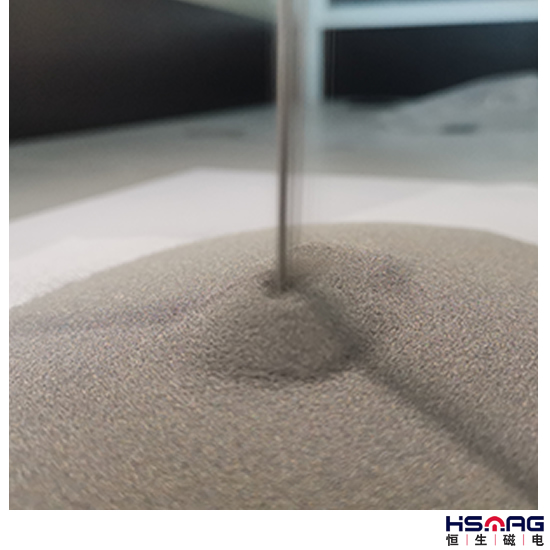
Our company is one of the earliest company engaged in the development, research and production of soft magnetic powder in China.By gas atomization and water atomization process,many kinds of products can be provided,such as FeNi,FeNiMo, FeSi and other soft magnetic powders, FeSiCr, amorphous and nanocrystalline powders for molding choke. FeCoNi powder for clutch.

Features
Features are as below:

• The powders which used for magnetic powder core have high saturation magnetic flux density, low core loss and high DC bias performance.
• we can provide both bare powders and insulating powders for molding choke with high permeability, good insulation resistance, excellent saturation characteristics.
• Magnetic powders used in clutch features long service life, high wear resistance, high temperature resistance, good stability and excellent magnetic properties.

Soft Magnetic Powders

Soft Magnetic Powders

Typical Applications
Typical applications are as below:

• Metal Powder Core
• Molding Choke
• Magnetic Clutch

Technical Specifications

1)Powders for Metal Powder Core

Powder Properties
ProductsChemical CompositionProcessOxygen Content
(PPM)
Apparent Density (g/cm³)Sieve Size
(mesh)
Laser Size
D50(um)
FeNiMoSi
Hi-Fluxbal48~52Gas atomization<500>4.8-120/-20030-50
Water atomization<200>3.9-80/-200/-32520-45
MPPbal80~831.8~2.5Gas atomization<300>5.0-80+400/-12040-80
Water atomization<1800>4.2-80/-200/-32520-50
FeSibal3~7Gas atomization<300>4.4-12040-65
Water atomization<150033.6-12030-55
Metal Powder Core Properties
Products①            Coer Loss(mW/cm³)②
DC Bias
Curie TempratureSaturation
(Bs)
Permeability
(μ)
u VS.T
(-55-125℃)
③
u VS.F
MHz
Hi-Flux(water)35076%500℃1.5T60-1601.61.2
Hi-Flux(gas)30085%500℃1.5T60-1601.61.2
Mpp(water)26057%400℃0.75T60-3000.62.7
Mpp(gas)22065%400℃0.75T60-3000.62.7
FeSi(water)80065%700℃1.6T26-9086.5
FeSi(gas)60075%700℃1.6T26-9086.5
Testing Conditions:①50kHz,100mT ②100 Oe,60u ③↓90%u


2)Powders for Molding Choke

Products Chemical CompositionOxygen Content
(PPM)
Tap Density
(g/cm³)
Laser Particle Size
FeSiCrB CD10D50D90 
FeSiCr-Abal.3-44-524004.023.510.124.2
FeSiCr-Cbal.4.5-5.55-622003..983.610.124.2
FeSiCr-Dbal.6-74.5-5.522003.953.59.924.2
FeSiCr-Ebal.7.5-8.53.5-4.522004.13.510.225.6
Amorphous-01bal.5-62.5-3.514004.344.210.225.1
Amorphous-02bal.6-72-32-30.5-1.010004.5810.224.850.2
Nanoerystalline-01bal.14004.413.89.923.8
All the above grades  can be supplied with bare powder and insulation coating powder


Molding Choke Properties
Products Permeability Voltage Resistance
(kV)
Anti Rust propertySaturation
(H20%)/Oe
① Coer Loss(mW/cm³)
FeSiCr-A38.20.7Good1304000
FeSiCr-C36.20.9Good1254200
FeSiCr-D34.21Best1204000
FeSiCr-E34.21Better1203800
Amorphous-0118.51Good1303200
Amorphous-0217.50.9Better1502800
Nanoerystalline-0119.50.9Better140900
Testing Conditions:①50kHz,100mT


3)Powders for Magnetic Clutch

Powder Properties
Products Chemical CompositionOxygen Content
(PPM)
Apparent Density (g/cm³)Flowability
(s/50g)
Sieve Size(mesh)
NiCoSiCFe
CF-18.5-9.522.5-23.50.2-0.5<0.03bal.<200>4.4<16-50+80,
-80+150,
-150


24mm PVC Pipe NdFeB Inserted Magnet

SmCo Pot Magnet with Male Threaded

25mm Bar Magnet SmCo, brass body with fitting tolerance h6

U-profile Shuttering System U60 with 2 chamfers

40mm Flat Alnico Deep Pot Magnet

16mm Alnico Deep Pot Holding Magnet with Fitting Tolerance h6

Magnetic Powder

25mm Alnico Deep Pot Magnetic System

AlNiCo Mounting Pot Magnet

6mm Deep Pot Alnico Cylinder Magnet w/ Internal Stem


Continue Reading
Magnetic Shielding Sheets

Magnetic Shielding Sheets

by potmagnetson 24 January 2026in Flexible Magnet, Magnetic Materials, Magnetic Strip, Magnets Kownledge No comment

Magnetic Shielding Sheets

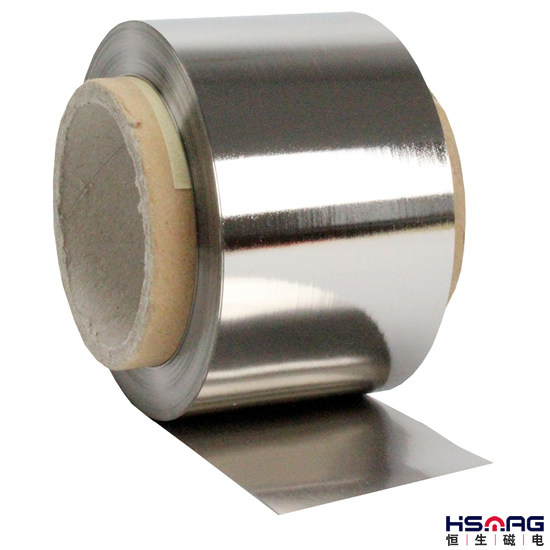
magnetic shielding sheets are classified as amorphous shielding sheets and nanocrystalline shielding sheets according to different kinds of soft magnetic materials. magnetic shielding sheets made of single-layer or multi-layer high-quality amorphous or nanocrystalline ribbon offer high permeability and low core losses. It can effectively reduce the EMI of magnetic field to the surroundings. It is widely used in aerospace, automotive, communications and other electronic equipment as EMI resistance, electromagnetic screen and wireless charging.

Features
Compared with ferrite shielding material,  Magnetic shielding sheets are featured with thin thickness, excellent flexibility, easy processing and wide working frequency range, which apply to the magnetic shielding of various electronic products. For wireless charging application, the Magnetic shielding sheet performs well in high power wireless charging with its arbitrarily adjustable permeability and excellent anti-saturation current.

Typical Applications
Magnetic shielding sheets are mainly used for EMI resistance, electromagnetic screens, NFC and wireless charging of various electronic products.

Magnetic Shielding Sheets

Technical Specifications

Part No.Product DescriptionTotal Thickness
(μm)
Alloy Thickness
(μm)
Adhesive Thickness
(μm)
Available Dimensions
Sheet①Roll②
L*W(mm*mm)Width (mm)Length (m)
MDWA0450251 Layer Amorphous45±4255√ 55/60/65≤400
MDWA0700502 Layer Amorphous70±7503√ 55/60/65≤200
MDWA1000803 Layer Amorphous100±10803√ 55/60/65≤200
MDWA1251054 Layer Amorphous125±121053√ 55/60/65≤100
MDWA1551355 Layer Amorphous155±151353√ 55/60/65≤100
MDWA1801606 Layer Amorphous180±181603√ 55/60/65≤100
MDWA2101907 Layer Amorphous210±201903√ 55/60/65/
MDWA2352158 Layer Amorphous235±232153√ 55/60/65/
MDWA2652459 Layer Amorphous265±262453√ 55/60/65/
MDWA29027010 Layer Amorphous290±292703√ 55/60/65/
MDWN0400201 Layer Nanocrystalline40±4203√ 55/60/65≤400
MDWN0600452 Layer Nanocrystalline60±6453√ 55/60/65≤200
MDWN0900703 Layer Nanocrystalline90±8703√ 55/60/65≤200
MDWN1100904 Layer Nanocrystalline110±10903√ 55/60/65≤100
MDWN1351205 Layer Nanocrystalline135±131203√ 55/60/65≤100
MDWN1601406 Layer Nanocrystalline160±161403√ 55/60/65≤100
MDWN1851657 Layer Nanocrystalline185±181653√ 55/60/65/
MDWN2101908 Layer Nanocrystalline210±211903√ 55/60/65/
MDWN2352159 Layer Nanocrystalline235±232153√ 55/60/65/
MDWN26024010 Layer Nanocrystalline260±252403√ 55/60/65/
Note: ①-Sheet: Customized, depending on drawings
          ②-Roll: Other width can be customized.


Bonded NdFeB Magnets and Assemblies

Sintered NdFeB Magnets and Assemblies

Pickup magnet

Strong NdFeB Magnetic Lifter PML3000A

Powerful Magnetic Lifter PML2000A

New Product 13000Gs Magnetic Rods!

Sintered NdFeB Magnetic Mounting Hook Ø48 mm
Sintered NdFeB Hook Magnet Ø38 mm

Clamping Hook Magnet Ø50 mm

Continue Reading
Bonded NdFeB Magnets and Assemblies

Bonded NdFeB Magnets and Assemblies

by potmagnetson 11 January 2026in Bonded Magnets, Magnetic Materials, Magnetic Powder, NdFeB No comment

Bonded NdFeB Magnets and Assemblies

Bonded NdFeb is a kind of magnetic material which contains binder and takes NdFeB alloy as main component. Bonded Neodymium-Iron boron generally includes two types: molding (thermo-hardening resin binder) and injection molding (thermo-plastic resin binder).The company has been engaged in the production and manufacturing of rare earth permanent magnets since 1989, and has accumulated 30 years of experience to provide customers with reasonable magnetic field simulation and design suggestions, and cooperate with customers to participate in the troubleshooting of Brushless DC motor.

Bonded NdFeB Magnets and Assemblies

Bonded NdFeB Magnets and Assemblies

Features
High-quality raw material supply, high-precision equipment and automation equipment testing, combining the work of senior engineers in magnetic materials research, so that each magnet is in line with the specifications of the customer drawings.With many years of experience with brushless DC, stepper motor professional manufacturers, in the solution of motor balance problems, static torque problems, motor ultra-high-speed applications and special environment applications have rich achievements, the magnet made by Highmag has the characteristics of high dimensional accuracy, stable performance and good one-time performance.

Typical Applications
Bonded NdFeb magnets are usually used as a micro-motor stator or rotor it’s magnetized and interacts with the winding coil to form a driving unit.Digital cameras in consumer electronics, camcorders;TV, DVD player, computer, server;Office automation printing, duplicator;No-box refrigerators, air conditioners, microwave ovens, coffee machines, hair dryers, etc.Base station with 5G communication;A fascial gun for exercise and fitness;Dental washers, disinfectant sprays and surgical saws for medical equipment;Automobile seats, sunroof, steering system, tail box, rearview mirror storage and other aspects have been widely used, especially in the national promotion of energy saving, fast and efficient today, brushless DC motor and its core parts (bonded Neodymium iron boron magnet) more indispensable change.

Technical Specifications
MAGNETIC AND PHYSICAL PROPERTIES OF INJECTION & BONDED MOLDING NdFeB MAGNET

GradeInjection  Molding  Bonded Molding
HMG-

2

HMG-

3

HMG-

4

HMG-

5

HMG-

6

HMG-

7

HMG-

2

HMG-

3

HMG-

4

HMG-

6

HMG-

7B

HMG-

8L

HMG-

8H

HMG-

8HD

HMG-

10A

HMG-

10L

HMG-

10H

HMG-

11L

HMG-

11H

HMG-

12H

HMG-

12L

HMG-

13L

Br    (KGS)3.0-4.03.5-4.54.5-5.04.5~5.55.0-6.05.3-6.23.0-4.03.5-4.54.5-5.05.0-6.06.0-6.56.3-6.76.2-6.86.2-6.66.5-7.27.0-7.56.5-7.07.0-7.56.5-7.27.2-7.857.2-7.857.8-8.3
Residual lnduction  (T)0.3-0.40.35-0.450.45-0.50.45-0.550.5-0.60.53-0.620.3-0.40.35-0.450.45-0.50.5-0.60.60-0.650.63-0.670.62-0.680.62-0.660.65-0.720.7-0.750.65-0.700.70-0.750.65-0.720.72-0.7850.72-0.7850.78-0.83
Hcb       (kOe)2.4-3.22.8-3.23.0-4.03.5-4.54.0-4.54.3-5.22.4-3.22.8-3.23.0-4.04.0-4.54.2-5.04.8-5.65.5-6.55.0-6.05.3-6.05.0-5.55.5-5.85.0-5.55.3-6.05.0-6.05.0-6.05.0-6.0
Coercive Force     (kA/m)192-256224-256240-320280-360320-360344-416192-256224-256240-320320-360336-400384-448440-520400-480424-480400-440440-464400-440424-480400-480400-480400-480
Hci   (kOe)6.0-8.06.0-8.07.0-9.07.0-9.07.0-9.06.5-116.0-8.06.0-8.07.0-9.07.0-9.08.0-10.08.0-10.012.0-16.011.0-14.08.0-10.06.5-8.09.0-11.56.5-8.08.5-10.08.0-10.06.5-8.06.0-8.0
Intrinsic Coercive Force(kA/m)480-640480-640560-720560-720560-720520-880480-640480-640560-720560-720640-800640-800960-1280880-1120640-800520-640720-920520-640680-800640-800520-640480-640
(BH)max  (MGOe)2.0-3.02.5-3.54.0-5.54.5~5.56.0-7.06.0-7.52.0-3.02.5-3.54.0-5.56.0-7.07.0-8.08.0-9.08.0-9.08.0-9.09.0-10.09.5-10.59.0-10.010.0-11.09.7-11.010.0-12.010.0-12.011.0-13.0
Max.Energy Product (kJ/m³)16-2420-2832-4436~4448-5648-6016-2420-2832-4448-5656-6464-7264-7264-7272-8076-8472-8080-8877.6-8880-9680-9688-104
μRecoll (μH/m)
Permeabilily
1.21.21.21.21.21.21.21.21.21.21.21.21.21.21.21.21.21.21.21.21.21.2
Temperature
Coefficient of B(%/℃)
-0.11-0.11-0.11-0.11-0.11-0.11-0.11-0.11-0.11-0.11-0.11-0.12-0.08-0.08-0.11-0.11-0.10-0.12-0.10-0.10-0.12-0.12
 Curie Temperature(℃)350320320320320350350320350350350350350350350350350320320320320320
Baturation(kA/m)
Magnetizing Force(kOe)
>1600>1592>1592>1592>1592>1592>1600>1592>1600>1600>1600>2400>2400>2400>1600>1600>1600>1600>1600>1600>1600>1600
>20>20>20>20>20>20>20>20>20>20>20>30>31>31>20>20>20>20>20>20>20>20
Max.Operating Temperature(℃)160160160160160160160160160160160160160180160160160160160160150150
Density           (g/cm³)4.0-4.54.0-4.53.9~4.94.5~5.04.5~5.55.0~5.54.5-5.05.0-5.55.2-5.75.5-6.05.4-5.95.7-6.15.7-6.25.7-6.25.9-6.25.9-6.25.9-6.25.9-6.25.9-6.26.0-6.36.0-6.36.1-6.4

16mm Theaded Socket Bushing Magnet

SmCo Countersunk Pot Magnets

42mm Threaded Fixing Neodymium Inserted Magnet

14mm Theaded Neodymium Inserted Socket Magnet

63mm 450 ° C Tolerance h6 Deep Pot Alnico Rod Magnet

4mm Steel Body SmCo Deep Cup Magnets

Rubberized Magnetic System Holding Mounting

Ceramic Channel Magnet Assemblies

Rubber Covered Magnetic Systems for Cable Mounting

Samarium Cobalt Pot Magnet with Screwed Bush

Continue Reading
Sintered NdFeB Magnets and Assemblies

Sintered NdFeB Magnets and Assemblies

by potmagnetson 2 January 2026in Magnetic Materials, Magnets Kownledge, NdFeB, Neodymium Magnets, Sintered Magnets No comment

Sintered NdFeB Magnets and Assemblies

NdFeB permanent magnet has extremely high properties (high residual induction, coercive force and energy product) with really competitive price. It can be machined into all kinds of shapes easily and used in many fundamental fields directly, such as new energy, vehicles, electron & electroacoustic, energy saving household appliances, industrial motor, instrument & apparatus, nuclear magnetic resonance, magnetic suspension field and so on. Magnets are also suitable for the high property, mini-size and lighted products.

Features
HSMAG is a magnetic material supplier with R&D, production and sales ability. We are providing top level magnets with customized coatings, weights and shapes. We also provide the design program, great service and technical support during all life cycle.

HSMAG has great power in R&D and holds Hitachi license. We have two production bases in NINGBO and HANGZHOU producing high grade magnets. The total capacity reaches 6000t. For the past several year, we supplied top level products and service to the customers including the world top 500 enterprises.

Sintered NdFeB Magnets and Assemblies

Sintered NdFeB Magnets and Assemblies

Typical Applications
Typical applications are as below:

• vehicle

EPS motor/drive motor/electricity generator/pump/sensors

• electronics

mobile/digital camera/hard disk drive/CD drive

• automation

servo motor/elevator motor/liner motor/electric tools

• energy

wind power

• environment

inverter air-conditioner/refrigerator/washing machine

• medical technology

nuclear magnetic resonance/CT scanner/ventilator

• aerospace & ship

ship powertrain

• railway

electricity powertrain

Technical Specifications

 Materials Grade Chart
GradeBr  Hcb / ≥Hcj / ≥(BH)max 
TKGskA/mkOekA/mkOekJ/m³MGOe
N421.28~1.3412.8~13.487611.095512318~34240~43
N451.32~1.3813.2~13.887611.095512342~36643~46
N481.36~1.4313.6~14.383610.595512358~39045~49
N501.39~1.4613.9~14.683610.595512374~40647~51
N521.42~1.4814.2~14.883610.595512390~42249~53
N541.44~1.5114.4~15.183610.595512398~43850~55
N561.46~1.5314.6~15.383610.595512414~45452~57
N42M1.28~1.3412.8~13.493811.8111414318~34240~43
N45M1.32~1.3813.2~13.897612.2111414342~36643~46
N48M1.36~1.4313.6~14.3101212.7111414358~39045~49
N50M1.39~1.4613.9~14.6103513.0111414374~40647~51
N52M1.42~1.4814.2~14.9104213.1111414382~42248~53
N40H1.25~1.3112.5~13.191211.5135317302~32638~41
N42H1.28~1.3412.8~13.493811.8135317318~34240~43
N45H1.32~1.3813.2~13.897612.2135317342~36643~46
N48H1.36~1.4313.6~14.3100012.6135317358~39045~49
N50H1.39~1.4613.9~14.6103513135317374~40647~51
N52H1.42~1.4814.2~14.9104213.1127416382~42248~53
N38SH1.21~1.2712.1~12.788611.1159220287~31036~39
N40SH1.25~1.3112.5~13.191211.5159220302~32638~41
N45SH1.32~1.3813.2~13.897612.2159220342~36643~46
N48SH1.36~1.4313.6~14.3100012.6159220358~39045~49
N50SH1.39~1.4613.9~14.6103513159220374~40647~51
N48SH-D1.36~1.4313.6~14.3100012.6159220358~39045~49
N50SH-D1.39~1.4613.9~14.6103513159220374~40647~51
N52SH-D1.42~1.4914.2~14.9105013.2159220390~42249~53
N54SH-D1.44~1.5114.4~15.1105813.3159220390~42250~55
N35UH1.16~1.2211.6~12.284510.6199025263~28733~36
N38UH1.21~1.2712.1~12.788611.1199025287~31036~39
N40UH1.25~1.3112.5~13.191211.5199025302~32638~41
N42UH1.28~1.3412.8~13.493811.8199025318~34240~43
N45UH1.31~1.3713.1~13.797612.2199025342~36643~46
N45UH-D1.31~1.3713.1~13.797612.2199025342~36643~46
N48UH-D1.36~1.4313.6~14.3100012.6199025358~39045~49
N50UH-D1.39~1.4613.9~14.6103513199025374~40647~51
N31AH1.09~1.1610.9~11.67729.7214927231~26329~33
N34AH1.15~1.2211.5~12.283610.5214927255~28732~36
N37AH1.20~1.2612.0~12.688611.1214927279~31035~39
N40AH1.25~1.3112.5~13.191211.5214927302~32638~41
N42AH1.28~1.3412.8~13.493811.8214927318~34240~43
N42AH-D1.28~1.3412.8~13.493811.8214927318~34240~43
N45AH-D1.32~1.3813.2~13.897612.2214927342~36643~46
N48AH-D1.35~1.4213.5~14.2100012.6214927358~39045~49
N30EH1.07~1.1410.7~11.47729.7238830223~24728~31
N33EH1.12~1.1911.2~11.981610.2238830247~27131~34
N35EH1.16~1.2211.6~12.284510.6238830263~28733~36
N38EH1.21~1.2712.1~12.788611.1238830279~31035~39
N40EH1.25~1.3112.5~13.191211.5238830302~32638~41
N40EH-D1.25~1.3112.5~13.191211.5238830302~32638~41
N42EH-D1.28~1.3412.8~13.493811.8238830318~34240~43
N45EH-D1.32~1.3813.2~13.897612.2238830342~36643~46
N48EH-D1.35~1.4213.5~14.2100012.6238830342~36643~46
N30TH1.06~1.1510.6~11.57659.6262733223~25528~32
N33TH1.12~1.1911.2~11.981610.2262733247~27131~34
N35TH1.16~1.2211.6~12.284510.6262733263~28733~36
N38TH1.21~1.2712.1~12.788611.1262733279~31035~39
N40TH-D1.25~1.3112.5~13.191211.5262733302~32638~41
N42TH-D1.28~1.3412.8~13.493811.8262733318~34240~43
N45TH-D1.32~1.3813.2~13.897612.2262733342~36643~46


Coating TypePhysical PropertiesEnvironment of Magnet ApplicationThickness of Coating LayerPictures
 ZincLayer with three kinds of color: silver, blue and white, rainbow etc.Coating layer is compact, stable and homogeneous.Suitable for common environment.4µm ~ 10µm
NickelHomogeneous and Light yellow layer.NiCuNi:Excellent corrosion resistance. Superior resistance against humidity and heat.15µm ~ 30µm
EpoxyBlack, gray layer with certain luster.Suitable for higher corrosive
environment.
≥15µm
AlThe coating has silver-white metallic luster, uniform color and clean surfaceIt is used in high anti-corrosion occasions, and the coating has no shielding effect on magnetic properties. 10µm ~ 25µm
Passivation
(Phosphorization)
Colorless or light gray layerSuitable for the situation of short-term transportation and storage.≤2µm
Micro BluingColorless or light blue layerSuitable for the situation of short-term transportation and storage.≤2µm


Curie Point℃310~370
Reversible temp coeffcient of Br 20-120℃%/℃-0.1~-0.13%
 Reversible temp coeffcient of Hcj 20-120℃%/℃-0.4~-0.7%
Densityg/cm37.3~7.7
 Vickers hardnessHv500~700
Bending strengthMpa150~400
Compressive strengthMpa800~1250
Specific resistianceμΩcm110~170
Thermal conductivityW/(m.℃)5~15
Coefficient of thermal expansion10-6/℃4~9
Coefficient of thermal expansion10-6/℃-2~0
Specific heatJ/(kg.℃)350~550
Young’s modulusGPa140~170

16mm Theaded Socket Bushing Magnet

SmCo Countersunk Pot Magnets

42mm Threaded Fixing Neodymium Inserted Magnet

14mm Theaded Neodymium Inserted Socket Magnet

63mm 450 ° C Tolerance h6 Deep Pot Alnico Rod Magnet

4mm Steel Body SmCo Deep Cup Magnets

Rubberized Magnetic System Holding Mounting

Ceramic Channel Magnet Assemblies

Rubber Covered Magnetic Systems for Cable Mounting

Samarium Cobalt Pot Magnet with Screwed Bush

Continue Reading
The Difference Between 2000 Gauss and 3000 Gauss Magnets

The Difference Between 2000 Gauss and 3000 Gauss Magnets

by potmagnetson 21 June 2022in Magnetic Materials, NdFeB, Neodymium Magnets

The Difference Between 2000 Gauss and 3000 Gauss Magnets

More and more customers are looking for some magnet questions to find magnet supplier HSMAG, why? Because the magnet question answering section of our website has gathered a lot of magnet knowledge and helped them solve many problems encountered in work or life. If you have a customized magnet procurement plan, welcome to consult.

I received a question from a netizen today. He asked if the magnetism of 2000 Gauss and 3000 Gauss is very different? Below is a simple answer.

First of all, let me tell you that the magnetism of NdFeB strong magnets (that is, what we call magnetic force) is mainly related to the magnet performance grade, size and other factors. For magnets of the same specification, the higher the performance grade, the stronger the magnetic force.

The larger the Gaussian value of the magnet does not mean the stronger the magnetism

3000 Gauss / 2000 Gauss disc magnet

Many people may not understand this, how can it be like this? Because the Gauss value of the magnet is related to the area of the magnet, it is not that the size of the magnet is larger, the Gauss value (surface magnetism) is higher, and vice versa, because the magnetic force will be dispersed, and the magnetic force is that the larger the contact area, the stronger the magnetic force.

Back to the question is 2000 gauss and 3000 gauss magnetic much different? In fact, whether it is big or big, or small or small, the key is to see the size of the magnet, which is mentioned above. For example, let’s say a D2*1.5 NdFeB small magnet has a magnetic surface of 2000gs, and a D40*10mm NdFeB magnetic surface has a magnetic surface of 3000gs. Think about the difference between them? The theoretical suction force of the D40*10 magnet is more than 30kg, while the small magnet of D2*1.5 may have a vertical holding force of 0.04kg.

Summary: Is 2000 Gauss and 3000 Gauss magnetic much different? The important thing is to see what kind of strong magnet is compared with. The smaller the difference between the two magnets, the smaller the magnetic difference. You can’t just look at the Gauss value of one surface of the magnet, remember.

Powerful Magnetic Lifter PML2000A

Magnetic Lifter PML100A

Permanent Magnetic Lifter PML300A

New Product 13000Gs Magnetic Rods!

Heavy Duty Magnetic Lifter PML6000A

New Product 13000Gs Magnetic Rods!

30mm Embeded Fixing Magnet for Precast Concrete

Continue Reading
Internal and external magnetization of permanent magnets

Internal and External Magnetization of Permanent Magnets

by potmagnetson 2 June 2022in Magnetic Materials, Magnets Kownledge, Neodymium Magnets

Internal and External Magnetization of Permanent Magnets

In addition to the axial magnetization, radial magnetization, thickness magnetization, and multi-pole magnetization that we often hear about magnets (magnetic steel), there are also internal magnetization and external magnetization. What are internal magnetization and external magnetization? Woolen cloth? Next, this article will introduce the meaning of internal magnetization and external magnetization and their advantages and disadvantages.

What is internal magnetization and external magnetization?

The shape of the inner magnetized and outer magnetized magnets is mainly arc-shaped, ring, and most of them are radially magnetized. If the inner magnetization is used, the inner arc or inner circle of the arc-shaped or ring-shaped magnet has strong magnetism, and the outer magnetized magnet has strong magnetic properties. The outer arc or outer circular surface has strong magnetic properties, and is mostly used in DC motors, sensors and other fields.

What are the advantages and disadvantages of internal magnetization and external magnetization?

internal magnetization and external magnetization

The disadvantage of radial outer magnetization is that the magnetic field is required to be large and there are many windings. The advantage is good heat dissipation.

The disadvantage of radial inward magnetization is that the winding is limited and the heat dissipation is not very good. The advantage is that it is easy to charge and saturate, and the structure is simple.

The above is the meaning advantages and disadvantages of internal magnetization and external magnetization introduced to you by HSMAG, the manufacturer of motor magnetic ring. If you have motor magnet procurement, engineering or procurement friends who ask for samples or questions, please contact the online customer service on the website to serve you.

Ceramic Mounting Permanent Magnets Ø 50 x 10 mm

Sintered polar anisotropic ring magnets

The Difference Between 2000 Gauss and 3000 Gauss Magnets

Permanent Lifter Magnet PML600A

6mm SmCo Rod Magnets Brass Body Fitting Tolerance h6

Colorful pot magnet

Rubber Covered Pot Magnets for Cable Mounting

10mm Deep Pot Alnico Permanent Magnet w/ tolerance h6

Continue Reading
New Product 13000Gs Magnetic Rods

New Product 13000Gs Magnetic Rods!

by potmagnetson 19 November 2019in Magnet Application, Magnet Separators, Magnetic Materials, Pot Magnets

New Product 13000Gs Magnetic Rods !

Recently, 13000Gs Magnetic Rods or Tube Magnets with Diameter 25mm, pole pitch 25mm was developed by advanced process from HSMAG Workshop. This product will be greatly increase the various magnetic filters (such as hopper magnets, grate magnets, drawer magnets, liquid magnetic traps, Rotatory grate magnets) efficient of removing or extracting super fine ferrous contamination from different powder materials or liquids, such as milk powder, charcoal, flavors, spices , vitamins , trace elements, pharmacy materials, etc., improve their purity .

New Product 13000Gs Magnetic Rods

New Product 13000Gs Magnetic Rods

And this strong magnetic rod also can increase the outer magnetic strength of easy cleaning grate magnets, magnetic trap, magnetic drawer from 8000Gs to 9000gs,even near 9500-10000Gs. Customer have new source for their high requirement application with economical price.

  • Internal Threaded Ceramic Cup Magnet Ø 50mm

    READ MORE
  • Threaded Bushing Ferrite Cup Magnet Ø 40mm

    Threaded Bushing Ferrite Cup Magnet Ø 40mm

    READ MORE
  • Internal Threaded Ferrite Mounting Magnet Ø 32mm

    Internal Threaded Ferrite Mounting Magnet Ø 32mm

    READ MORE
  • Internal Threaded Sintered Ferrite Pot Magnets Ø25mm

    Internal Threaded Sintered Ferrite Pot Magnets Ø 25mm

    READ MORE
Continue Reading
Neodymium Magnet is The Heart of Wind Turbines

Neodymium Magnet is The Heart of Wind Turbines

by potmagnetson 19 November 2019in Magnet Application, Neodymium Magnets

Neodymium Magnet is The Heart of Wind Turbines

Neodymium Magnet Wind Turbines – As a result of global warming, many countries are trying to cater to their energy requirements using green energy sources. Solar energy and wind energy have gained much attention as a result of that. Out of these two options, wind power is recognized as the most effective method available to generate energy. In order to generate this energy, large scale wind farms should be there in operation and they need to have efficient turbines.

Have you ever wondered what makes these turbines convert wind power into energy? They have in-built motors that are made out of a special rare-earth magnet called neodymium. Special properties that exist in this rare earth magnet have forced people to use them in motors that are used in wind turbines.

Neodymium Magnet is The Heart of Wind Turbines

Neodymium Magnet is The Heart of Wind Turbines

This rare-earth magnet is made as a result of chemical bonds that take place between other minerals and materials. Therefore, they need to be extracted using special methods, which cause huge environmental impacts. This has resulted in the production of inconsumable underground water in some places.

Neodymium magnets can be considered as a powerful and strong magnet. Its weight is significantly low when compared to other rare earth magnets available. Moreover, it is affordable and the manufacturers can use them in their productions without any hesitation. These reasons have forced people to use neodymium in the production of wind turbines since there is no better option available.

Siemens, who is one of the world’s largest wind turbine manufacturers, has greatly been affected by some restrictions. However, Enercon, which is a German manufacturer that makes direct-drive turbines without neodymium have not been affected by this because they follow a unique path. They don’t need to use permanent magnets because of their unique mechanism, but the cost associated with the production process is extremely high.

The popularity of neodymium magnets is increasing day by day. Many people and industries find it as a great element available for their projects. Unfortunately, the increased usage of neodymium has created a wide range of health issues. Even though most of these issues take place as a result of negligence, it is important to pay attention to this and keep people away from these harmful effects as much as possible.

Neodymium became a common element in the manufacturing process of jewelry, toys and other novelty items in the early 2000s. During the late 2000s, it became an important aspect of the novelty toys, which were aimed at adults. Along with with the increasing number of incidents in pediatric ingestion related injuries, the US Consumer production safety commission banned the sale of all the products that included this powerful magnet. The seriousness was highlighted in 2012 with the numerous cases that were related to pediatric bowel perforation and the death of one child who had accidentally swallowed it.

At the moment, you won’t be able to find kids’ toys that contain neodymium within the United States. However, it has not put a stop to the above-mentioned problems because some countries still use this magnet in toys. You can easily find adult desktop toys on the internet for sale. As per the latest news, it has been identified that Canada is taking necessary actions to ban such toys and save Canadians from neodymium.

In summary, neodymium is a powerful magnet available and they are invaluable in most of industries like in wind power generation. Therefore, the industries that use these elements should use them in an appropriate manner and the people who use them should also take care when purchasing items containing neodymium magnets.

  • Huge Threaded Bushing Ceramic Holding Magnet Ø 125mm

    READ MORE
  • Big Threaded Bushing Ferrite Holding Magnet Ø 100mm

    Big Threaded Bushing Ferrite Holding Magnet Ø 100mm

    READ MORE
  • Large Threaded Bushing Ferrite Magnetic Pot Ø 80mm

    Large Threaded Bushing Ferrite Magnetic Pot Ø 80mm

    READ MORE
  • Threaded Bushing Ceramic Holding Magnet Ø 63mm

    Threaded Bushing Ceramic Holding Magnet Ø 63mm

    READ MORE
Continue Reading
  • 1
  • 2
  • 3
  • 4
  • »

Archives

  • February 2026
  • January 2026
  • June 2022
  • November 2019
  • October 2019
  • June 2018
  • May 2018
  • November 2017
  • January 2017
  • December 2016
  • November 2016
  • August 2016

Tags

Absorber Sheet Absorber Sheet Magnet alnico magnet Alnico pickup magnet BaFe12O19 Barium bonded magnets Bonded NdFeB Magnets Ceramic magnet Ceramic magnetic materials Cup Magnets durable magnets EMI flexible magnet Injection molded magnets magnetic assemblies Magnetic compound magnetic drum magnetic materials Magnetic performance magnetic powder Magnetic Sheets Magnetic Shielding magnetic strength Magnetic Strip Mounting Magnets Multipole Magnet Ring NdFeB permanent magnet permanent magnetic head roller permanent magnets Pickup magnet plastic bonded ferrite magnetic powders Pot Magnets Pot Magnet with Through Hole Mounting powerful magnets Round Base Magnet Rubber Coated Magnetic Pots rubber magnet sheet magnet Sintered Magnets Sintered NdFeB Magnets SrFe12O19 Strontium Wind Turbine Magnets Wind Turbines

Categories

  • Advertising Magnet
  • Bonded Magnets
  • Ferrite Magnet
  • Flexible Magnet
  • Fridge Magnet
  • Magnet Application
  • Magnet Separators
  • Magnetic Materials
  • Magnetic Powder
  • Magnetic Sheeting
  • Magnetic Strip
  • Magnets Kownledge
  • Mounting Magnets
  • NdFeB
  • Neodymium Magnets
  • Pot Magnets
  • Promotion Magnet
  • Rubber Magnets
  • Sintered Magnets

Feature Products

  • NdFeB Pot Magnets
  • Ferrite Pot Magnets
  • Alnico Pot Magnets
  • SmCo Pot Magnets
  • Rubber Coated Pot Magnets

SCAN TO YOUR MOBLIEPHONE

Informantion

  • Magnet Materials
  • Technical Specifications
  • Neodymium Safety Tips
  • Ferrite Safety Tips
  • Shipping Magnets by Air
  • Magnetics Glossary
  • Magnet Testing
  • Magnet FAQ
  • Beauty Machine
  • Brass Tube
  • Bucket Tooth
  • Cutting Edge

Company

  • About us
  • Warranty
  • Privacy Policy
  • Environmental Policy
  • Terms & Conditions
  • Custom Magnets
  • Pet Supplies
  • Bucket Teeth
  • Inquire Large Orders
  • Permanent Magnet
  • Neodymium Magnet
  • NdFeB Magnet
  • Power Tools Accessories

HSMAG POT MAGNETS SOLUTION

  • No.8 East Section Yinxian Road, Ningbo, Zhejiang, China
  • 86-574-27667267
  • info@hsmagnets.com
  • www.hsmagnets.com

© Copyright 2019 - HSPOTMAGNETS.COM All Rights Reserved. Powered by HSMAG Team

Get a quote

    Fill out the following form to the best of your ability so that we can prepare your free quote.

    Your Name (required)

    Your Email (required)

    Your Phone

    Your Message

    Attachment File